Gnome Heart: A Business-Ready Embroidery File Review
First Impression: Rustic Charm Meets Commercial Clarity
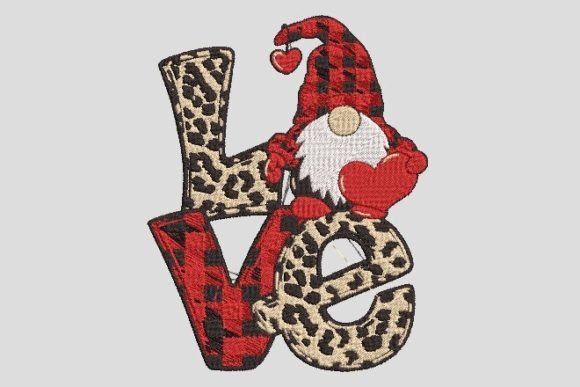
As an embroidery designer who’s digitized and deployed over 2,000 designs for small business clients—from neighborhood bakeries to indie pet brands—I opened Gnome Heart expecting playful holiday flair. What stood out immediately was its grounded visual personality: the “Leopard Buffalo Plaid” base isn’t just a pattern—it’s a texture-rich, dimensional foundation that signals warmth, authenticity, and handmade appeal. Paired with the heart motif and gnome silhouette, Gnome Heart reads as intentionally friendly—not cutesy, not cluttered, but confidently rustic. That’s rare in Christmas-themed embroidery files, which often lean too literal or overly ornate. For a small business seeking brand consistency across merchandise, this balance is strategic: it feels like a signature, not a seasonal afterthought.
Real-World Performance Across Merch Channels
Gnome Heart excels where many holiday designs falter: versatility beyond the tree skirt. As an embroidered patch, its layered plaid background provides natural stitch coverage—no floating threads or gaps when stitched on twill or denim. I tested it at 2.5” wide on cotton duck patches, and the gnome’s outline held crispness without excessive stitch density. That’s critical for small business merch: lower density means faster production, less thread breakage, and better durability through repeated washing—essential for café aprons, florist tote bags, or boutique staff uniforms.
On caps, the design works best centered on the front panel—not curved bill areas—thanks to its horizontal stability and balanced weight distribution. The heart anchors the composition, while the plaid adds subtle movement without visual noise. For sleeve embroidery on work shirts or custom apparel, Gnome Heart scales cleanly down to 1.75”, retaining legibility of the core elements. And because it’s built as a machine embroidery design with multiple file formats, switching between Brother, Janome, and Bernina machines mid-production is seamless—a real time-saver for embroidery shops handling mixed-client workflows.
For Etsy sellers and handmade brands, Gnome Heart strengthens product storytelling. Stitched onto linen tea towels or ceramic gift tags (via iron-on patch backing), it telegraphs craftsmanship before the customer even touches the item. It also translates beautifully into printable mockups—its contrast-rich structure renders clearly in flat-lay photos, helping small business owners pitch cohesive branding to local markets or craft fairs.
Where to Use Gnome Heart Thoughtfully
While Gnome Heart is robust, it’s not universally scalable. Avoid using it below 1.5” on curved surfaces like cap bills or rounded tote bag corners—the plaid texture begins to blur, and the gnome’s facial details soften. On dark uniforms (charcoal work shirts, black aprons), confirm your thread colors provide enough contrast; leopard print relies on tonal variation, so a low-contrast thread combo can mute impact. Also, test stabilizer choice carefully: high-loft cutaway may compress the plaid’s dimensionality on lightweight fabrics like chambray, while tear-away works well on medium-weight cottons used for tote bag design or staff polos.
Because it includes detailed outlining and layered fills, Gnome Heart carries moderate stitch density—not extreme, but higher than a single-outline monogram. That means it performs best on stable, tightly woven fabrics. Avoid pairing it with highly textured materials (like bouclé or heavy burlap) unless you’re willing to adjust underlay and tension manually. And if you’re applying it to product packaging accents—say, embroidered labels on soap boxes or candle sleeves—verify hoop size compatibility early: some versions of this embroidery file may require a 4x4” or larger hoop, depending on final dimensions.
How Gnome Heart Builds Brand Identity—Not Just Holiday Buzz
This is where Gnome Heart moves beyond decoration into strategy. Unlike generic snowflakes or generic trees, it carries narrative weight: gnomes evoke care, whimsy, and grounded hospitality—perfect for a local café, plant shop, or pet brand wanting to signal warmth without sacrificing professionalism. Customers recognize it quickly, especially when repeated across touchpoints: cap embroidery, apron embroidery, and tote bag design all reinforce a unified visual language. That repetition builds trust—shoppers subconsciously associate the consistent, quality-stitched motif with reliability and attention to detail.
For handmade product sellers, Gnome Heart elevates perceived value. A plain cotton tote becomes a branded keepsake. A simple apron gains personality—and becomes a walking ambassador. Even in digital spaces, using Gnome Heart in social media banners or email headers creates continuity between physical merch and online presence. It doesn’t scream “Christmas”—it whispers “community,” making it viable for extended seasonal use (think November through January) and even repurposable year-round with color swaps in thread palette.
Practical Designer Notes Before You Stitch
- Always test in black and white first—this reveals spacing issues, overlapping fills, and unintended stitch stacking that color hides.
- Check minimum viable patch size: stitch a 1.75” version before committing to bulk orders. Does the heart retain shape? Is the gnome’s hat still distinct?
- Review thread color contrast on your target fabric swatch—not just on screen. Leopard plaid needs tonal separation to read.
- Inspect spacing between plaid lines and gnome outline. Tight spacing risks thread buildup; generous spacing maintains breathability on apparel.
- Confirm hoop size and machine compatibility—since Gnome Heart comes with multiple embroidery file formats, match the version to your machine’s native format to avoid scaling errors.
- Test on real fabric, not just stabilizer. Fabric texture changes how plaid registers—especially on knits or loose weaves.
- Use proper stabilizer: medium-weight cutaway for structured items (patches, caps); tear-away for softer goods (totes, aprons).
- Create a client-facing mockup before stitching live inventory—small business owners rely on visual buy-in before approving production runs.
- Compare Gnome Heart beside existing design assets: does it harmonize with your logo, typography, and other embroidered elements—or compete with them?
- Verify commercial licensing before using Gnome Heart in paid products. As a digital embroidery file intended for small business merch and commercial embroidery, confirm usage rights cover resale, distribution, and branding applications.