My 1st Thanksgiving Applique
A Craft Fair Designer’s First Look: Cute, Clear, and Commercially Smart
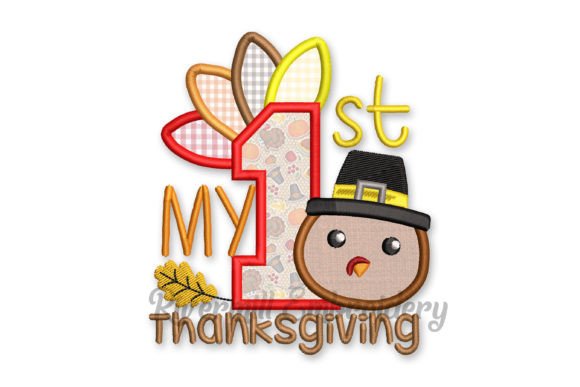
As an embroidery designer who’s prepped over 200 craft fair booths—from snowy Midwest markets to sun-drenched Southern pop-ups—I know what stops a shopper mid-aisle. My 1st Thanksgiving Applique lands right in that sweet spot: soft but festive, nostalgic but fresh, baby-focused without feeling cloying. It reads instantly as “first holiday”—not generic Thanksgiving—and the combo of turkey + pumpkins + personalized text gives it immediate emotional resonance. No decoding needed. That’s gold at a craft fair where attention spans are measured in seconds.
Where This Design Shines on Handmade Products
This isn’t just another embroidery file—it’s a versatile craft fair product engine. On a natural canvas tote bag? Perfect. The turkey anchors the design while the pumpkins add playful rhythm, and the “My 1st Thanksgiving” text reads cleanly even from six feet away. On an apron? It works beautifully above the pocket—small enough to feel intentional, large enough to be legible. For tea towel embroidery, I’d recommend placing it centered near the hem: the rounded shapes soften the kitchen’s hard edges, and the applique style holds up well against frequent washing and fabric texture.
As an embroidered patch? Excellent. Its clean outlines and moderate scale mean it’ll stitch consistently across batches, and customers love attaching patches to heirloom blankets or nursery wall hangings. On a structured cap? Proceed with caution—curved surfaces can distort small lettering, so test the “My 1st” text first. But on a flat-front fabric pouch or pillow cover? Ideal. The design fills space without overwhelming, and its balanced proportions translate well across both square and rectangular formats.
What Makes It Sell—And What Demands Extra Care
My 1st Thanksgiving Applique succeeds because it’s emotionally specific and visually forgiving. Buyers don’t need to imagine how it fits—they see a baby’s milestone, not just a holiday theme. That clarity boosts perceived value: a $32 embroidered tea towel feels like a keepsake, not just home decor. In your booth display, group it with coordinating items—a matching embroidered bib, a mini pumpkin sachet, and a linen pouch—to reinforce handmade quality and brand consistency.
But let’s talk practicalities. If the embroidery file includes dense stitch areas around the turkey’s feathers or tiny pumpkin stems, those spots may require extra stabilizer on lightweight fabrics—or risk puckering on textured towels. Small lettering (especially in “1st”) must be tested at your smallest intended size: if you’re offering a 3-inch version for onesies, confirm readability before cutting production fabric. Dark fabric? Prioritize high-contrast thread colors—cream or mustard over navy, not light gray. And always verify hoop size compatibility: a design meant for a 4x4 hoop won’t scale cleanly to 5x7 without re-digitizing.
Photography, Listings, and Online Conversion
This design photographs exceptionally well—soft curves, friendly shapes, and warm seasonal tones translate beautifully to Etsy listings and Instagram posts. Use natural light and real fabric backdrops (a folded flannel blanket, a wooden tray with cinnamon sticks) to elevate your printable mockup. Avoid overly staged shots; buyers want to see how it looks *in use*. A photo of the design stitched on a gauzy muslin swaddle, draped over a rocking chair, tells a stronger story than a white-background PNG.
For digital sellers, bundle My 1st Thanksgiving Applique with complementary assets: a coordinating border file for tea towels, a simplified monogram variant for onesies, or alternate color palettes (muted sage + terracotta, or classic black + cream). That turns a single embroidery file into a full small shop product line—increasing average order value and repeat visits.
Production Notes Every Embroidery Designer Should Run
- Test on scrap fabric first—especially if using terry cloth, linen blends, or fleece-lined pouches.
- Check thread contrast across at least three base colors: cream, charcoal, and oatmeal.
- Review spacing between elements: tight gaps between turkey and text could vanish on thick stabilizer or heavy fabric.
- Confirm hoop size and stitch density before batching—dense fills heat up needles faster and increase thread breakage risk.
- Use cutaway stabilizer for knits, tear-away for stable wovens, and fusible + tear-away for tea towels with raised loops.
- Create at least one real mockup—not just a digital preview—before listing or packing for market day.
- Compare fabric colors side-by-side under daylight and indoor lighting; dye lots vary, and pumpkin orange can shift dramatically.
- Verify commercial licensing before selling finished products—this is non-negotiable for Etsy sellers and boutique makers.
Final Thought: Why This Belongs in Your Holiday Lineup
My 1st Thanksgiving Applique isn’t just seasonal—it’s sentimental infrastructure. It supports storytelling (baby’s first holiday), builds collections (add a “My 1st Christmas” next year), and scales across price points—from $18 patches to $48 pillow covers. It draws parents, grandparents, and gift-givers alike—not because it shouts “Thanksgiving,” but because it whispers “memory.” In a crowded craft fair aisle or a scrolling Etsy feed, that quiet sincerity cuts through. Just remember: every great machine embroidery design starts with intention, not just inspiration. Test it, touch it, photograph it, and most importantly—stitch it like it’s going home with someone’s favorite person.