Moon Snow: A Whimsical Winter Embroidery Design Worth Your Thread
First Impressions: Charm That Doesn’t Overpromise
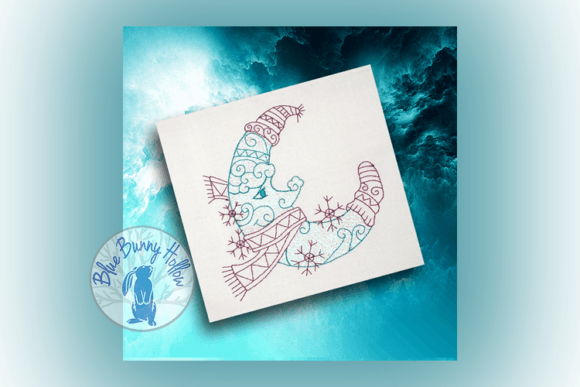
When I opened Moon Snow for the first time, I wasn’t greeted with cluttered layers or forced cuteness—I saw a quiet, confident winter voice. The Mylar moon anchors the composition with soft curves and an approachable face—gentle but not saccharine. Around it, themed objects (think tiny snowflakes, subtle stars, maybe a curled ribbon or frost-kissed branch) feel intentional, not tacked on. There’s breathing room between elements, which tells me this wasn’t rushed through auto-digitizing software. As a designer who’s stitched hundreds of holiday and seasonal embroidery files, that restraint is rare—and valuable. It reads as handmade, not mass-produced.
A Real Project Test: Embroidering Moon Snow on a Linen-Cotton Tote Bag
Last week, I used Moon Snow on a custom order: a medium-weight linen-cotton tote for a local boutique’s holiday collection. The client wanted “cozy but modern”—no glitter, no cliché snowmen. I chose a matte charcoal thread on natural fabric, hooped with medium tear-away stabilizer. The result? Crisp satin stitch defining the moon’s outline, balanced fill stitches in the background elements, and clean running stitch accents where needed. No puckering. No skipped stitches. Most importantly, the design held its personality at 4.2 inches wide—the perfect scale for a tote’s front panel without overwhelming the fabric’s texture.
Where Moon Snow Shines (and Where It Needs Thought)
- Custom apparel: Works beautifully on sweatshirts and lightweight fleece—especially when placed on the left chest or upper back. The moon’s round shape avoids awkward distortion on curved seams.
- Baby embroidery: Ideal for onesies, burp cloths, and crib blankets. Its gentle expression and open layout avoid tiny, risky details that snag or fray with washing.
- Embroidered patch: Clean edges and moderate stitch density make it a strong candidate for iron-on or sew-on patches—just confirm your backing holds up to heat if using fusible web.
- Holiday gifts & boutique branding: Feels special without being overly thematic—it bridges Thanksgiving through early January, avoiding dated “Merry Christmas” pressure.
- Etsy seller asset: Stands out in listings because it’s distinctive yet versatile. Pair it with neutral thread palettes in your mockups, and it sells itself as a thoughtful, design-forward choice.
Use With Care: Practical Limits You’ll Notice Stitching
Moon Snow isn’t built for every surface—and that’s okay. Here’s where I pause before pressing “start”:
- Thin or stretchy fabric: Skip lightweight knits unless you add cut-away stabilizer underneath. The moon’s facial features rely on stable tension—stretch distorts those subtle curves fast.
- Dark fabric: Test thread contrast carefully. Light gray or silver thread can disappear on navy or black; go one tone lighter than you think, or use a soft metallic for lift.
- Caps and curved surfaces: The full layout may crowd a front cap panel. Consider cropping to just the moon + one accent—say, the top snowflake—for better fit and clarity.
- Tiny hoop sizes (under 4"): Some surrounding elements shrink into indistinct blobs. If you’re stitching for keychains or mini pillows, prioritize the moon alone and simplify manually—or ask your digitizer for a scaled-down version.
- Frequent-wash items (tea towels, baby bibs): Avoid high-density fill areas near delicate corners. Run a quick wash-and-dry test on scrap first—watch how the moon’s smile holds up after agitation.
What Moon Snow Adds to Your Finished Product—Beyond Pretty
It’s easy to call something “whimsical” and move on. But in practice, Moon Snow lifts perceived value. When customers see that expressive moon on a handmade pillow cover or personalized sweatshirt, they register care—not just craft. That translates directly to trust. Etsy buyers scroll past generic snowflake borders; they stop for character. For small shop owners, it becomes part of a quiet brand language: warm, grounded, seasonally aware but never trendy.
It also plays well with others. Use it solo for minimalist impact, or layer it thoughtfully—say, above a monogram on a kitchen towel, or nestled into a corner of a nursery quilt. Because the layout leaves space, it doesn’t compete with typography or other motifs. And yes—it photographs well in printable mockups. The contrast between the Mylar-inspired shine (even in matte thread) and soft winter shapes gives digital previews dimension without needing shadows or filters.
Designer Notes Before You Stitch
- Always run a test on scrap fabric matching your project’s weight and weave.
- Check stitch density visually—if fills look muddy or overly dense, adjust underlay or reduce density slightly.
- Confirm hoop size compatibility *before* loading. Some versions of Moon Snow may include alternate layouts; review all files in your embroidery software.
- Inspect small details at 200% zoom: eyelashes, snowflake points, edge smoothness. If anything looks jagged or thin, it may need manual cleanup.
- Test black-and-white mockups. Does the design retain legibility and warmth without color? It should.
- Compare light vs. dark fabric backgrounds in your design software—this reveals where contrast might fail.
- Choose stabilizer based on fabric, not habit: tear-away for stable wovens, cut-away for knits, and water-soluble for dense embellishments.
- If selling finished items commercially, verify licensing terms. Not all embroidery files allow resale of physical goods—check before listing on your small shop or craft fair table.
In short: Moon Snow earns its place in my active embroidery library—not because it’s flashy, but because it’s reliable, expressive, and quietly smart. It’s the kind of machine embroidery design that makes clients say, “I’ve never seen one like this,” then turn it over to admire the backside stitching. That’s the mark of thoughtful digitizing. Use it where you want warmth to land gently—not shout. And always, always stitch it like it matters. Because for your customer, it does.