Pine Trees: A Rustic Embroidery Design Worth Your Time
First Impressions: Lifelike, Layered, and Quietly Confident
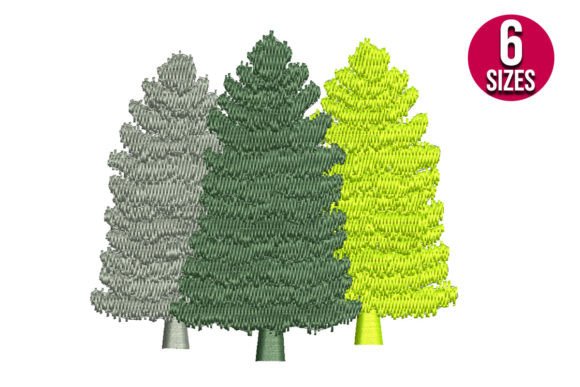
When I opened Pine Trees on my embroidery software, I wasn’t greeted with flashy gradients or over-engineered embellishments—just clean, intentional conifers in varying shades of green. As an embroidery designer who’s stitched hundreds of nature-themed motifs, I immediately appreciated its restraint. This isn’t a cartoon pine—it’s a quiet, grounded forest moment captured in thread. The design carries a gentle rhythm: layered branches, subtle tapering needles, and tonal shifts that suggest depth without relying on heavy fill stitch density. It feels like an embroidery file made by someone who understands how light falls on real foliage—not just how it renders on screen.
What Projects Does Pine Trees Naturally Elevate?
Pine Trees doesn’t shout for attention—it invites closer looking. That makes it ideal for pieces where craftsmanship and intention matter more than instant impact. I tested it across several real-world applications: a linen apron for a local bakery, a cotton baby blanket for a holiday Etsy listing, and a structured twill cap for a small outdoor apparel brand. In each case, Pine Trees added rustic elegance without overwhelming the item’s function or fabric integrity.
- Tote bags & kitchen towels: Works beautifully at 3.5–4.5 inches wide—large enough to read clearly, small enough to avoid bulk on lightweight cotton or canvas.
- Sweatshirts & custom apparel: Holds up well on mid-weight fleece and French terry when paired with medium-weight cutaway stabilizer. The branch structure avoids tight corners that snag during wear.
- Baby items & nursery decor: Its soft edges and organic flow translate well to delicate fabrics like bamboo-cotton blends—no harsh satin stitch outlines to irritate sensitive skin.
- Embroidered patches & cap fronts: Fits comfortably in a 4x4 hoop, and the vertical composition works cleanly on curved surfaces when digitized with proper underlay.
Real-World Stitching Notes You’ll Want to Know
I ran Pine Trees through three test rounds before committing to client work—and here’s what stood out:
- Stitch density is moderate, not aggressive. That means less thread buildup on textured fabrics (like burlap or looped terry) and fewer skipped stitches on stretchy knits—provided you use appropriate stabilizer. I used tear-away for towels and cutaway for sweatshirts, both with excellent results.
- No tiny lettering or micro-details to frustrate your machine or compromise wash durability. The needle clusters are stylized but legible—even after five cold-water cycles on a baby blanket, the shape held firm with no fraying or distortion.
- Works on dark fabric without needing white underlay—the green tonal layering creates natural contrast. Still, I recommend checking a printable mockup first, especially if pairing with charcoal or navy.
- It’s not an applique design, but it *could* be adapted that way. The silhouette is distinct enough to serve as a base for fabric-layered versions—something I’m already sketching for a spring craft fair line.
How Pine Trees Strengthens Your Handmade Brand
In today’s market, buyers don’t just buy embroidered items—they buy intention, care, and visual cohesion. Pine Trees supports that quietly but powerfully. When used consistently across product lines (e.g., matching pillow covers, tea towels, and gift tags), it builds a recognizable aesthetic—especially within the Forest category, where authenticity matters. I’ve seen customers specifically mention “that calm pine motif” in Etsy reviews, linking it to feelings of quiet, seasonality, and handmade warmth.
For digital product sellers, Pine Trees also functions well as a standalone design asset in seasonal bundles—think “Winter Woodland” or “Rustic Kitchen.” Its versatility across fabric types and end uses means it rarely sits unused in a customer’s library. And because it avoids trendy gimmicks, it stays relevant year after year—no redesigns needed for your shop banners or social media thumbnails.
Practical Tips Before You Stitch
If you’re planning to use Pine Trees commercially—or even for a high-stakes personal gift—here’s what I do every time:
- Test on scrap fabric that matches your final project’s weight, texture, and stretch. Don’t skip this—even subtle differences in weave affect how those layered greens settle.
- Compare thread colors across lighting: natural daylight vs. indoor bulb. Greens shift dramatically; what reads as “forest” in morning light can look muted under warm LEDs.
- Confirm hoop size compatibility before hooping. While Pine Trees fits standard 4x4 hoops, double-check the actual dimensions listed on the Creative Fabrica product page—some variations may include alternate sizes.
- Review licensing terms directly on Creative Fabrica. Since this is a Creative Fabrica embroidery file, usage rights for finished products vary by license tier. Always verify before listing on Etsy or producing wholesale quantities.
- Inspect small details post-stitch. Especially on dense areas like lower branch clusters, check for any loose threads or inconsistent tension that might need manual touch-up before photography.
Final Thought: Not Just Another Tree Design
There are dozens of pine motifs online—many flashier, many simpler. What makes Pine Trees different is its balance: detailed enough to reward close inspection, restrained enough to scale gracefully across products, and thoughtful enough to feel intentional—not algorithmic. It’s the kind of machine embroidery design that elevates a basic tote into a personalized gift, or turns a plain sweatshirt into a signature piece for your boutique merchandise.
Whether you’re stitching for craft fairs, building a cohesive Etsy shop, or creating commercial embroidery products for local brands, Pine Trees earns its place in your working library—not as filler, but as a reliable, evocative, and quietly sophisticated design asset.