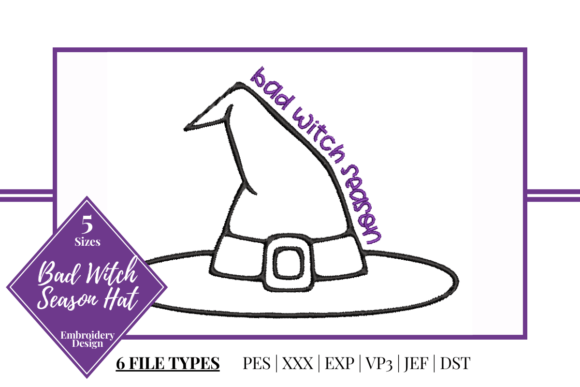
Bad Witch Season Hat
A Practical Review for Etsy Sellers & Small Craft Businesses
As someone who’s curated over 200 embroidery designs for my own Etsy shop—and helped dozens of fellow craft business owners build seasonal collections—I took a close look at Bad Witch Season Hat before adding it to my Halloween lineup. It’s not just about spooky charm—it’s about commercial viability, stitching reliability, and how well it translates across products customers actually buy.
First Impressions: Playful, Bold, and Unmistakably Seasonal
The name alone tells you what you’re getting: a confident, tongue-in-cheek Halloween vibe—less “cute witch,” more “unapologetically magical.” Based on the description—“a wonderful way to add a stylish accent to home decor, outfits, and accessories”—this feels like a bold, modern, and playful machine embroidery design. It’s not delicate or minimalist; it’s got presence. That makes it ideal for products where personality matters: embroidered tote bags, unisex sweatshirts, aprons for bakers and bartenders, and even kitchen towels that double as conversation starters.
It leans into the “funny but stylish” sweet spot many Etsy shoppers love—especially those buying personalized gifts for friends who lean into Halloween all year long. Think: “My therapist says I’m a bad witch—and she’s right” energy. That tone resonates with adults shopping for themselves or gifting to fellow creatives, not just kids’ costumes.
Where Bad Witch Season Hat Shines in Your Product Line
This isn’t a one-trick design. Its versatility is its biggest strength—especially when paired with thoughtful product execution:
- Tote bag design: Stitches cleanly on medium-weight canvas, reads clearly at 5–6 inches wide, and photographs beautifully against natural light or rustic backdrops—perfect for Instagram and Pinterest mockups.
- Sweatshirt embroidery: Works well on crewnecks and hoodies (front chest or sleeve placement). The bold lettering and stylized “witch” motif hold up even with slight fabric stretch.
- Baby embroidery & nursery decor: Surprisingly adaptable—scale down for onesies or baby blankets, then pair with soft thread colors (muted purples, charcoal greys) to soften the edge without losing charm.
- Embroidered patch: Clean outlines and moderate stitch density mean it’ll press well onto twill or denim, making it great for iron-on or sew-on patches sold separately or applied to caps and jackets.
- Personalized gift anchor: Pair Bad Witch Season Hat with custom names (“Witchy Wendy,” “Bad Witch Briar”) or dates (“Est. 2024”) for high-margin listings—especially strong for October birthdays or “witchy wedding” favors.
Why It Supports Strong Etsy Listings & Boutique Merchandise
For Etsy sellers, visual clarity and emotional resonance are non-negotiable. Bad Witch Season Hat delivers both: it’s instantly recognizable at thumbnail size, communicates mood in under two seconds, and feels premium—not clipart-y. That helps your listing stand out in search results and increases click-through rates.
It also lends itself beautifully to printable mockups. Whether you’re building a cohesive seasonal collection (think: matching apron + towel + pillow cover), shooting lifestyle photos for social media, or creating scroll-stopping Reels showing the stitch-out process—you’ll get consistent, professional-looking results.
From a buyer perspective, this design makes finished products feel more giftable (it’s memorable, shareable, and emotionally specific), more professional (clean lines, intentional spacing), and easier to photograph (no tiny details lost in shadows or texture).
What You Need to Test Before Listing
Even great Creative Fabrica embroidery files need real-world validation. Here’s what I always do before launching any new embroidery file—including Bad Witch Season Hat:
- Stitch a sample first: Run it on your most common fabric type (e.g., cotton twill for totes, fleece for blankets) using your go-to stabilizer combo. Note how it handles curves and dense areas.
- Photograph on real fabric: Don’t rely solely on digital mockups. Natural-light shots of the actual stitch-out help you assess contrast, texture, and scale—and give you authentic content for your listings.
- Compare thread color options: Since the description notes “colors can be altered based on the embroidery thread colors put in your m…”—confirm how flexible the file is. Can you easily reassign colors in your embroidery software? Does it include multiple thread palettes?
- Check readability at thumbnail size: Zoom out to 25% in your design preview. Does the phrase “Bad Witch Season Hat” stay legible? If letters blur or merge, consider simplifying or pairing with a smaller secondary graphic.
- Review stitch density and hoop size: High density = longer run time and possible puckering on lightweight fabrics. Confirm the recommended hoop size and whether it fits your standard hoops (e.g., 4x4, 5x7) before investing in samples.
- Verify licensing for commercial embroidery: Creative Fabrica licenses vary. Double-check that the Bad Witch Season Hat embroidery file permits use in finished goods sold on Etsy, at craft fairs, or through your own website—especially if you plan to offer it as part of custom apparel or handmade product bundles.
Final Thoughts for Handmade Product Sellers
Bad Witch Season Hat isn’t just another Halloween embroidery file—it’s a commercially smart addition to your seasonal rotation. It bridges trend-awareness and timelessness: witchy aesthetics aren’t going anywhere, and this design avoids dated tropes (bats, cauldrons, cartoonish fonts) in favor of confident, contemporary style.
For craft business owners building a recognizable brand voice—or Etsy sellers refreshing their October inventory—it offers flexibility without sacrificing impact. Used thoughtfully, it supports higher perceived value, stronger visual storytelling, and repeatable product development across apparel, home goods, and personalized gifts.
Just remember: no digital embroidery file replaces real testing. Stitch it. Photograph it. Try it on three different fabrics. Then decide—not based on the title alone, but on how it performs in your hands, on your materials, and in your customers’ carts.