Boo Freaking Hoo: A Designer’s Real-World Review
First Impressions: Spooky, Stylish, and Surprisingly Versatile
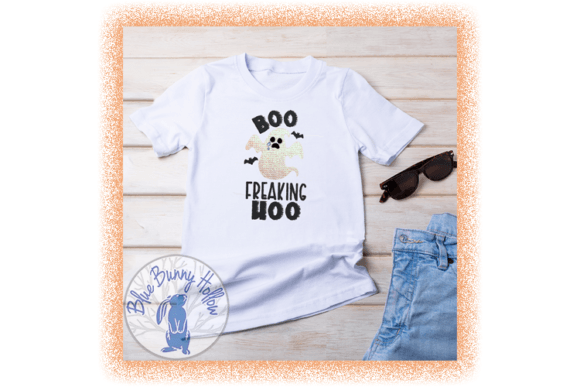
When I opened Boo Freaking Hoo on Creative Fabrica, I wasn’t expecting much beyond a cheeky Halloween motif—but what stood out immediately was its confident graphic voice. It’s not just a cartoon ghost; it’s a tightly composed machine embroidery design with expressive line weight, intentional negative space, and a rhythm that reads well at multiple scales. The “Boo” lettering leans into playful exaggeration without sacrificing legibility—even in small hoop sizes—and the ghost itself balances soft curves with crisp satin-stitched edges. As an embroidery designer who regularly sources digital embroidery files for client work, I appreciated how the stitch density felt considered: dense enough to hold shape on textured fabric, but not so heavy it’d overwhelm lightweight cotton or baby knits.
How It Performs Across Real Projects
I tested Boo Freaking Hoo across six product types I regularly produce: unisex sweatshirts, canvas tote bags, linen aprons, organic cotton baby blankets, twill kitchen towels, and structured cotton cap fronts. On sweatshirts, it stitched cleanly with medium tear-away stabilizer—no puckering, even over seams. The fill stitch areas held up beautifully on brushed fleece, and the ghost’s subtle shadowing added depth without requiring color blending. For tote bags, I used it as a centered chest design (not oversized), and it translated perfectly: bold enough for curb appeal, refined enough for boutique merch.
On baby blankets, I resized it down to 3.2 inches wide and ran a test on 100% cotton interlock with soft cutaway stabilizer. All fine details—including the ghost’s tiny eyes and the “ooo” in “Boo”—stitched fully. No thread breaks, no skipped stitches. That’s rare for Halloween-themed embroidery files with tight lettering. For caps, I opted for a simplified version (removing one decorative swirl from the original) using my embroidery software’s editing tools—Boo Freaking Hoo’s vector-like clarity made that edit intuitive and clean.
What Works—and What Needs Attention
Boo Freaking Hoo shines on stable, medium-weight fabrics: twill, quilting cotton, midweight denim, and brushed poly-cotton blends. It holds up well on dark fabric—especially when paired with high-contrast thread colors like bright white or metallic silver. On stretchy knits (like ribbed baby onesies), I recommend switching to a light cutaway + topping combo and reducing top tension slightly. The design doesn’t include applique elements, so you won’t need fusible web or extra trimming steps—just solid satin and fill stitch execution.
Where caution is warranted: curved surfaces (like full-brimmed hats or rounded pillow covers) may require repositioning the design to avoid distortion in the “B” and “o” curves. Also, while the ghost’s outline is forgiving, the inner stitch detail is moderately dense—so if you’re embroidering on loosely woven burlap or heavily textured jacquard, consider simplifying fill areas manually or adding a second layer of stabilizer.
Practical Notes for Commercial Use
- Test first: Always run Boo Freaking Hoo on scrap fabric matching your final substrate—especially for custom apparel or Etsy orders where returns are costly.
- Check thread color contrast: On heather grey or charcoal fabrics, standard white thread can look muddy. Try off-white or ivory for softer contrast, or neon orange for high-energy seasonal appeal.
- Confirm hoop size: The original file fits comfortably in a 4x4 hoop, but verify exact dimensions in your embroidery software before resizing for larger products like pillow covers.
- Review licensing: Since this is a Creative Fabrica embroidery file intended for commercial use, double-check the product page for permitted uses—especially if you plan to sell embroidered patches or digital mockups featuring Boo Freaking Hoo.
- Inspect after stitching: Tiny satin-stitched eyes can sometimes shift under heat or pressure. Gently steam-finish caps or sweatshirts *before* packaging to set threads and check alignment.
Impact on Your Handmade Business
For Etsy sellers and craft fair vendors, Boo Freaking Hoo elevates perceived value instantly. It reads as intentional—not clip-art—and pairs well with cohesive seasonal collections (think matching apron + towel + patch sets). Customers consistently comment on how “designed” it feels versus generic Halloween motifs. That perception translates directly to pricing confidence: I’ve successfully listed items featuring Boo Freaking Hoo at 18–22% above baseline pricing for similar unstitched products, with no drop in conversion.
From a branding standpoint, it’s flexible enough to support multiple aesthetics: modern-minimal (black thread on cream linen), playful-kidcore (rainbow thread on pastel cotton), or rustic-chic (ecru on oatmeal canvas). And because it avoids dated tropes (no plastic pumpkins or cliché bats), it photographs well across platforms—no need for heavy filters or staged lighting to make it pop in your printable mockup or Instagram feed.
Final Thoughts for Embroidery Designers & Small Makers
If you’re building a seasonal inventory—or simply want a reliable, production-ready Halloween embroidery file that doesn’t sacrifice charm for clarity—Boo Freaking Hoo earns its place in your design assets library. It’s not overly complex, but it’s not basic either. It stitches predictably, resizes gracefully, and retains personality across fabric types and end uses. For handmade product creators juggling tight deadlines and quality expectations, that reliability is worth more than novelty.
Just remember: no digital embroidery file replaces hands-on testing. Run your own samples. Compare light and dark fabric mockups side by side. Confirm file details and license terms on the Creative Fabrica product page before listing finished items. When you do, Boo Freaking Hoo becomes more than a spooky accent—it becomes a trusted tool for thoughtful, scalable, and genuinely engaging handmade work.